




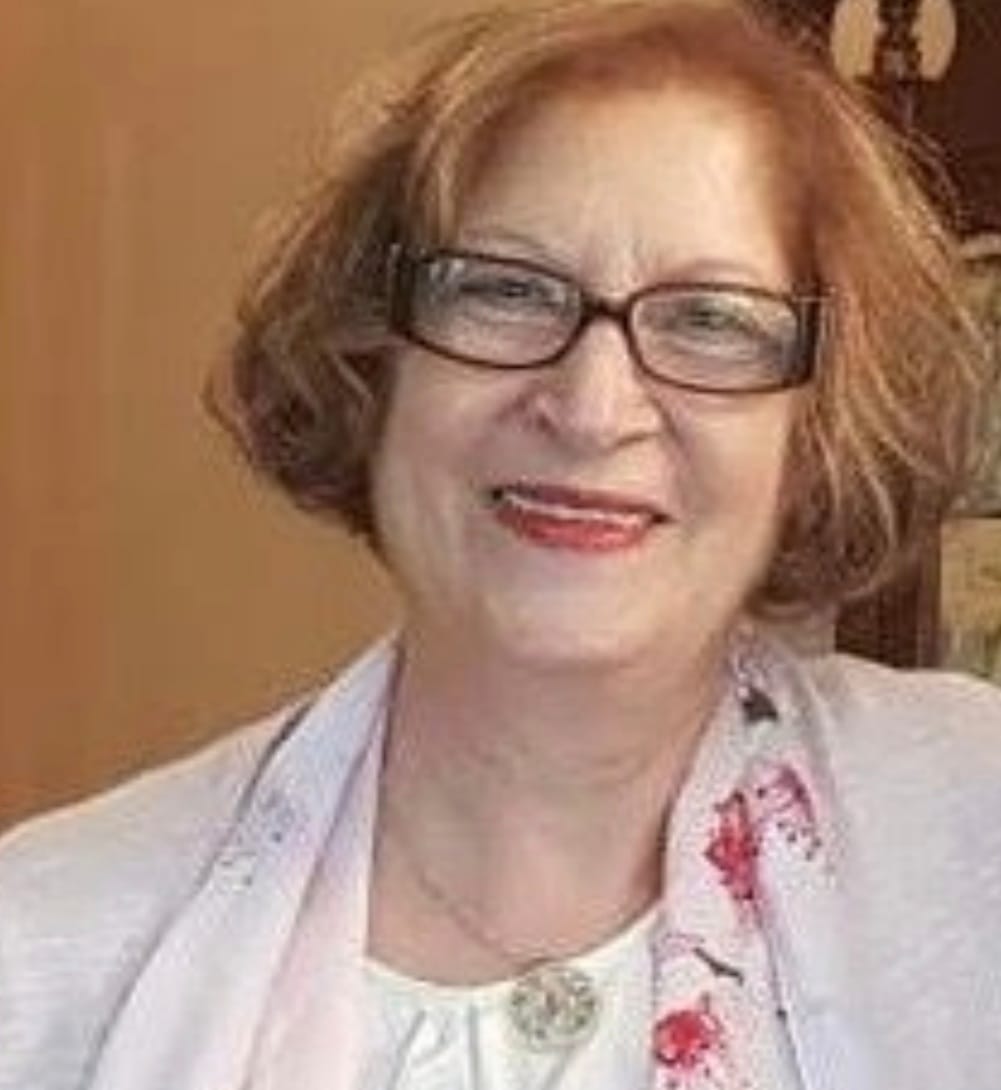
Rouquia Alami
The question of Palestine was, is, and will continue to be active as a global matter until the sustainable demands “the Right to Refugees Return” and “the Liberation of Occupied Palestine” are achieved.
Here, and in context, is the story of a Palestinian family’s chronicles that sadly happened because of a series of events: The Nakba and ensuing displacement and the occupation and its repercussions, were the beginning of the refugees’ catastrophic journey, which led to the creation of UNRWA.
Story of My Family, Story of a Nation, was addressed in an open letter to Filippo Grandi Commissioner-General of the United Nations Relief and Works Agency for Palestine Refugees in the Near East (UNRWA) during 2010-2014 and Deputy Commissioner-General during 2005- 2010.
My story reflects my family’s journey and could be viewed as an example of other Palestinian families’ suffering. Therefore, I considered re-circulating it to reveal historical facts that resulted from this conflict.
Dear Filippo,
Story of my Family Story of a Nation
As I see you leave UNRWA after years of work with refugees, I feel that there are no words to describe the efforts, and the good will you showed during your office duty. Such enterprise is very much appreciated and remarked by general public. Indeed a unique duty with strong obligations you faced in this part of the World.
Let me introduce myself: My name is Rouquia Alami, UNRWA staff member and if you like, a Palestinian woman and a daughter of one of thousands of martyrs whose lives were taken during the Israeli Palestinian conflict.
My father is Abdul Karim Alami. He was one of the pioneer ambitious Palestinian young men, who with his family, during the war of 1948 were forced migration from his hometown LOD near TAL Al RABE’I (known later as Tel Aviv.).
He started out with the Red Cross to help refugees but few months later UNRWA was created and all Red Cross Staff who were in charge of the refugee file, had duties transferred to UNRWA mandate.
My father ((known among refugees as Abu Shaker) started his duty on 1949 with UNRWA in Nablus Area. It is unnecessary to describe the situation refugees were living since your initiate project to archive the chronicle day-by-day Palestine refugee experience. Great achievement; Archived photos and films talk and illustrate documenting this era of hard time.
Gloomy nights and winters passing by: tents blown away from wind and storms, refugees shivering from cold weather, lack of clean water, and shortage of food and medicine. All this made UNRWA staff back then live sleepless hours of darkness trying to find solutions to all those problems.
My father and his fellow colleagues used to sit in Jerusalem schools (aid shelters then) to distribute food like flour, oil and food cans. Then the emphasis stress urged staff to start registering the refugees and this was the curve that made refugees settle by granting the ration cards issued by UNRWA. It was authenticated presence and a defector had to be accepted.
Mother tells the story that significant numbers of Palestinian refugees, which were driven out of their villages and towns in 1948, ended up in the Noble Sanctuary in Jerusalem and makeshift refugee camps in and near Jerusalem. Refugees were hungry, exhausted, and had none off their belongings, which they had to abandon. They nominated my father, who was a refugee himself, to represent their situation to the authorities in Jerusalem for assistance. My father went to the military governor, portraying the refugees’ miserable conditions; he demanded that assistance be provided to them. The military governor obliged and ordered that a ration of a loaf of bread be distributed daily to each refugee.
A hundred thousand Palestinian nationals found themselves officially registered as refugees. It was authenticated presence and a defector had to be accepted. This was a turning point and suddenly the refugees in existing camps began to put bricks around those tents leading to walls and ceilings.
No matter what happened then that my father left UNRWA and went to Saudi or came back to Jerusalem to establish the Palestinian Liberation Organization (PLO) offices in Jerusalem. But he, like any other Palestinian, ever main concern in life was the refugees and the Palestinian cause. As he was putting all his aim and faith to be directed to Palestine freeing, he did not know that he would be a victim of its aggressive wars and armed conflicts.
During the 1967 June War, my father, who was 39 years old at the time, was slain during an Israeli air-raid on Jericho city; he was killed in front of my eyes and the eyes’ of five other siblings. After he perished all six of us and Mother trying to carry the body to put in the car, we pull him but the body kept falling back onto the sand. Jumping with fear and tears, only one man helped us to put the body at the back seat of the car. At that point, my brave mother, who exemplifies hundreds of Palestinian women, drove his bloodied body from Jericho to Salt City in Jordan, crossing Allenby Bridge, driving wordless while six children sitting over the body weeping.
When she sheltered my father’s body in SALT Government hospital, I then heard the nurse saying that this is the first fatality we received today. At that time we didn’t know that my father would be number one in a queue of thousands of martyrs and war victims to follow.
Mother’s aim was to handover the body meanwhile focusing on counting her six children not to miss any of them. Yet she did not know that ahead of this were going to be a struggle in life; since that moment she was plunged into the role of the only bread winner for her family.
That is then she joined UNRWA Ramallah Women’s Training Centre (RWTC) famous as AL-TIREH. She worked as home-mother in-charge of the boarding section. When she started task, she was forced to leave six children at home, the eldest being 13 years old and the youngest was 4, with no supervision from adults, since she had to sleep in the dorms. This lasted for 20 years and only left UNRWA on retirement basis. We self-raised ourselves and each other.
Not to forget our grandmother – A bereaved mother – who was in continual sadness that leads to helplessness when she was around us at the beginning of those lean years?
RWTC secured education to thousands of women graduates either by teacher training or by vocational training. It is not essential to tell you the poverty and misery the refugees live, as you may know better. But all this by that time, and every other day, refugees were under the impression that this is all temporary and one day there will be “the return”.
My father used to watch Palestine Horizon from our house balcony in Ramallah every eve in summer days. He used to take his binoculars to watch the sea and YAFFA lumières. A seen printed in our memoir.
Later on, as the days passed, his grand children, while visiting Ramallah, would go every sundown to the roof with the same binoculars that their grandfather owned and watch same horizon.
I was a graduate from RWTC and my twin sister too now working with the UN in Africa.
What for all time made me sad is about daily incidents in UNRWA: in camps, schools, and colleges have been always photographed. The crisis of my family incident broke my heart and this suffering used to worsen when I was pictured. Why should I, among hundred of young women, be followed by cameras. This always happened not only in UNRWA but also in the Occupied Territories in particular during intifada. When I became old enough, I found out that those photos were used as a support for fund raising, and this is cruel.
Secretaries, teachers, child care providers, nurses, lab technicians, hairdressers, dress makers all those women graduates from UNRWA training centers were spread during the 60’s and 70’s in Gulf countries in particular Kuwait.
In addition, UNRWA schools over decades generated artists, writers, prominent figures, and successful business people. Palestinians are well rooted and made a good job in building not only the Arab World, but Worldwide. They were spread everywhere successful; remarkable for whatever they achieved, no matter how they lived or accomplished their compass direction is the “return.”
Besides the miserable history Palestinians endured, in addition they paid a huge price and suffered tremendously due to Arab conflicts not mentioning Beirut, the Kuwait turning point and latest the Syrian crises.
In my entire life I was named with too many names: the occupation generation, martyr’s daughter, the Lebanese when I lived in Iraq and the Expatriate in Jordan.
Three Quarters of a million Palestinians had to leave Kuwait. In Kuwait in 1990 I lived for 16 years and was called the foreigner or and the stranger. When back to Palestine we were called the returnees. After returning from Kuwait returnees shared misery and hard days with residents during the INTIFADA. Still they struggled with big faith towards a return.
Few years later I joined UNRWA Amman.
I do not know but a lot of time I feel that UNRWA is a blessing; it secured education and jobs for us, but sometimes when it is darkened and I see all that is happening, I say where is my father to see all this escalation while posing a question: “ Why all this had to exist to begin with?”
Is this destiny? Looking back with bitterness and listening to the story of refugees some accurate some not: in order to deepen its roots, the issue of identity rose up and the activists concern was how to preserve the Palestinian identity and to prevent its Obliteration. Documentation projects accelerated and started archiving by meeting women directly collecting stories and cases from them as eye-witnesses.
I was among those enthusiastic to preserve history that made me focus on women issues and women human rights; one of the most important projects I implemented in my life was when I worked on Research Project on Documentation on Palestinian Women Struggle & Political Role for the period from 1927 – 1965. Historical narrative recited by women.
Before my mother passing away, the story of UNRWA establishment, the NAKBA and her struggle as Palestinian mother was documented by the Historical Documentation Division at Birzeit University. My mother then was interviewed by Sameeh Hammoudeh – Historian and Blogger. My mother who was 80 years old then stood by the camera as strong as an olive tree. The interview is shown on U-tube “The wife of Abdul Kareem Alami”. That was clever tip from my sister Lina who works at Birzeit University to maintain this initiative by recording it.
In Ramallah my mother was known as the “DEAN of Martyrs’ Wives”.
I only saw her tears once pouring: why because she could not be promised to be buried in Jerusalem in her family’s cemetery near AQSA mosque. Due to Jerusalem closure instead she was buried in El-Bireh cemetery on a hill overlooking the prairie of Jerusalem, around graves of Jerusalemites who were also deprived to reach their birthplace even after death.
20 months later I will be leaving UNRWA on retirement basis sad. Why? Because more and more refugees were created in the area and the priority now is not for Palestinian refugees. It is for all other newly misplaced refugees in the neighborhoods. Palestinian refugees now are old news.
This decade’s eyes are no longer directed to Palestinian refugee camps; it is directed to ZAATARI and to Yarmouk refugee camps. But this time it is not documented by ORAL History or paper media, it is witnessed via satellites, Internet, and channels in an open wide space.
Mr. Grandi
One of your significant achievements was supporting Mohammed Assaf: meaning supporting Palestinian youth. I was not only happy for him but was contented for his mother, as well. His achievement changed her life. But even when UNRWA student Mohammed Assaf was named Arab Idol some Arab citizens said on social media that this is not the time for Palestinians to have Arab Idol candidate; rather focus on their cause. They do not know that the Palestinian cultural individuality was parallel to the struggle against occupation. Some people don’t want us to be a part of those cheerful occasions.
What a twist of fate: at the end of your task Filippo your main concern was Yarmouk camp, your end point visiting the camp was same of the beginning point that UNRWA staff started in 1949.
I agree, and millions of Palestinian refugees do with your last quote while leaving office “Palestinian Refugees Will Find Justice in the End.” I thank you and wish to see that happen in my lifetime, or maybe in another generation’s. When my grandchildren read this blog on their mother’s PC, they will see my hope and aim hopefully achieved.
I have to drop you a small line it was always spoken up by my daughter (36 years old): she says: “my daughter’s two Palestinian girls live in Dubai in a high sky scraper but yet their breakfast is Zait wu Zaatar. The Zaatar was handmade in Palestine and the Zait is from a lonely tree in Palestine.
Finally my granddaughter Zeena Qawas (7 years old) who lives in luxury in Dubai City was on the top of a hill in Amman country side, while standing looking towards space she told me: “Teita I can see Palestine and there I can see HAIFA her father ancestors city. She was pointing toward the same point her mother’s grandfather was pointing to.
That is hope for a return.
March 2014
 English
 Español
 Deutsch
 Français
 العربية