




Amjad Ismail Al-Agha/ writer and political researcher
It was not surprising, in light of what the occupied Palestinian territories are witnessing, that the discourse adopted by the countries that raise the banner of liberation of Palestine remains within terms and titles that do not achieve the goals and objectives of the Palestinians, but rather provide for their launchers a political investment that can be employed in the context of regional projects, and with the Al-Aqsa Flood Operation entering its fourth week and with Deepening the headlines of Israeli crime. However, what is clear in this context is the state of the Iranian and Turkish discourses towards the Palestinian developments, especially since the two countries present themselves as a vanguard model in adopting and serving the Palestinian cause, but each of them has a political investment that serves its interests in the region.
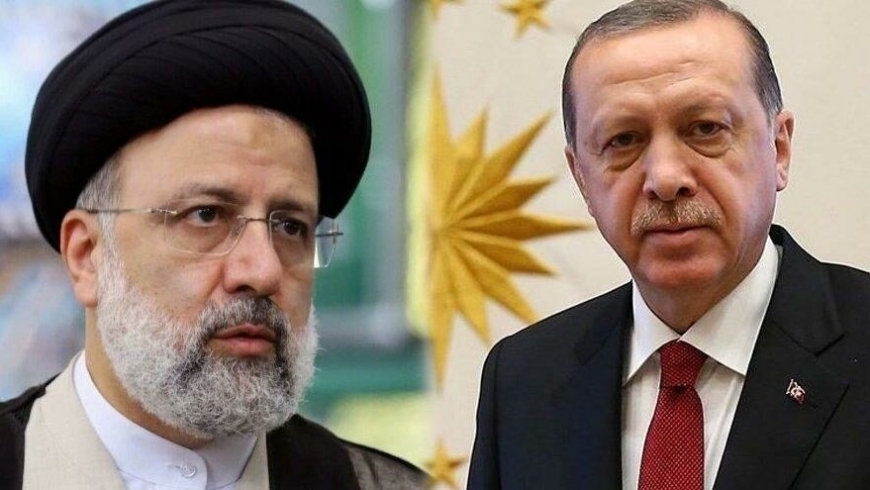
In describing the Iranian and Turkish discourses, it appears that Iran and its strategic patience have entered into the context of regional interests that cannot be compromised, even at the expense of the Palestinian issue. Thus, the Iranian discourse is unique in its systems of statements of condemnation and threats to expand the scope of the war, but it seems clear that this discourse has become a burden. It is strategically heavy for Tehran, and it is not possible to risk what has been achieved regionally and internationally, especially reconciliation with Saudi Arabia, as well as the path of the nuclear agreement. As for Turkish rhetoric, as usual, it is good at turning around at the appropriate time, to present itself as an influential regional actor, and there is no harm in tickling the feelings of the Arab and Islamic nations, in a speech. Erdogan excelled in investing and employing it on several occasions, in a scene that appears to be the legitimate heir to Iranian discourse regarding the Palestinian issue.
Iran and Turkey are two regional powers on the borders of the Arab world. They compete for influence in the Arab Levant and take Palestine and its issue as a title for expansion, intervention and political investment. However, in light of the Al-Aqsa flood operation and the rapid developments in Palestine, the two countries refrained from interfering except in what serves their interests and in a way that does not affect A later stage for what could be produced by the developments of the Al-Aqsa Flood operation.
The Battle of Al-Aqsa Flood clearly revealed the confused Iranian discourse, which did not rise to the level of the Palestinian event with its profound headlines. What developments are witnessing in Palestine have revealed the policy of Iran and the entire axis towards Palestine, so that the unity of the arenas in light of the Palestinian battle appears as a slogan upon which policies of regional expansion are hung. Thus, the Iranian discourse Whoever raised the slogan of supporting and liberating Palestine was only to achieve attractiveness in the content of the speech and to demonstrate two things, one of which is what Iran calls “supporting the oppressed and combating global arrogance,” and the other is hostility to the United States and Israel, which consolidates the mental image of Iran in terms of the fact that Iran is adopting the resistance strategy that it is promoting in the region. .
Turkey monitors Iranian discourse and its associated political behavior, and it is aware of the extent of the Iranian dilemma in the Al-Aqsa Flood Battle regarding the possibility of direct intervention in the battle or allowing resistance factions to intervene, but within the conditions of a carefully thought-out response that does not allow being drawn into a wide regional war, and within this Iranian approach. Turkey will look for the possibility of filling the void created by the retreating Iranian rhetoric, and although Ankara had previously tried to play this role after the Turkish ship “Marmara” attempted to break the siege of Gaza and was subjected to a bloody Israeli attack in 2010, Turkish interests today require not to antagonize Israel and its axis. American Western Atlantic.
The Turkish discourse towards the Palestinian issue was summarized by Turkish Foreign Minister Hakan Fidan by saying, “Either going to a historic peace or to a comprehensive regional war.” But what is striking is that the Turkish discourse presented itself as a guarantor of any agreement, whether alone or in cooperation with Arab countries. An assessment of the Turkish position concluded that the American and Western crowds that came to the Mediterranean are larger than the Gaza Strip, and that these military capabilities came to engineer a new regional reality and rearrange the region within the framework of the global order, which the United States leads without dispute, and this is what Operation Al-Aqsa Flood proved, but there is no harm. From raising your voice loudly towards Palestine, investing in the Palestinian issue and the events in Gaza, and warning Israel of the consequences of continuing its war against the Palestinians, the Turkish bet in this context revolves around the need of the United States, European capitals, and even NATO for the Turkish role in confronting Russian threats, at least at this stage, in addition to Turkey’s awareness that the United States will enter a period of regional stagnation in preparation for the presidential elections.
On the land of Palestine, Tehran finds itself facing an Islamic partner who speaks like it about Palestine, but it is a partner that is working to remove the banner of liberating Jerusalem from it, especially since Iran will not offer more in the battle than the speeches and statements of Minister Abdullahian, and here Erdogan is sitting on a seesaw moving between “the states.” The United Nations and its axis” and the “Islamic nation”, so that Erdogan was in a state of complete relaxation by declaring that he would stand with the Palestinians and cry over them while at the same time taking into account the interests of Israel, and by accepting Sweden’s accession to NATO.
He sends a message of friendship to the United States and the West, which openly embrace the increasingly ferocious Israeli attack on Gaza and its residents, and warn Iran against getting involved, otherwise it will be responsible for spreading “terrorism” in the Middle East and bear the consequences.
Iran has become accustomed to exploiting regional files and issues to compromise its relationship with the West, especially Washington. While relations between Tehran and Washington have calmed down, Iran does not want to lose the gains it has achieved, and therefore it is unlikely that Iran will intervene to support Hamas in its confrontation with Israel in order to avoid angering Hamas. The United States at the present time, especially since there is no tension in relations with it that would require Iran’s intervention to put pressure on the West, and Tehran, in order to save face, is trying to push some of its agents to launch some low-level military attacks on American bases in Syria and abroad. This is fine, as Iran, Israel, and Washington are aware of the rules of engagement between them, according to which they can determine the amount of low-intensity military attacks or military escalation aimed at heavy losses.
Iran, as a country, has refrained from direct intervention in the conflict with Israel, and has kept its missiles designated for the liberation of Jerusalem in storage. On the other hand, Erdogan is working to escalate his political discourse in preparation for declaring Israel a war criminal and Hamas a liberation movement, not a terrorist organization, without this meaning a dispute with Israel. Erdogan said it clearly a few days ago in front of Parliament, “Turkey has no problem with the State of Israel.” Thus, the Turkish discourse provides Ankara with a role it seeks, which is the role of a “guarantor” for a settlement that may occur after the war, which provides it with a direct presence in Gaza and perhaps other regional files. Between the rhetoric of condemnation and denunciation, the Turkish and Iranian threat, and the preservation of interests and gains, the liberation of Jerusalem will remain electronic!
 English
 Español
 Deutsch
 Français
 العربية