




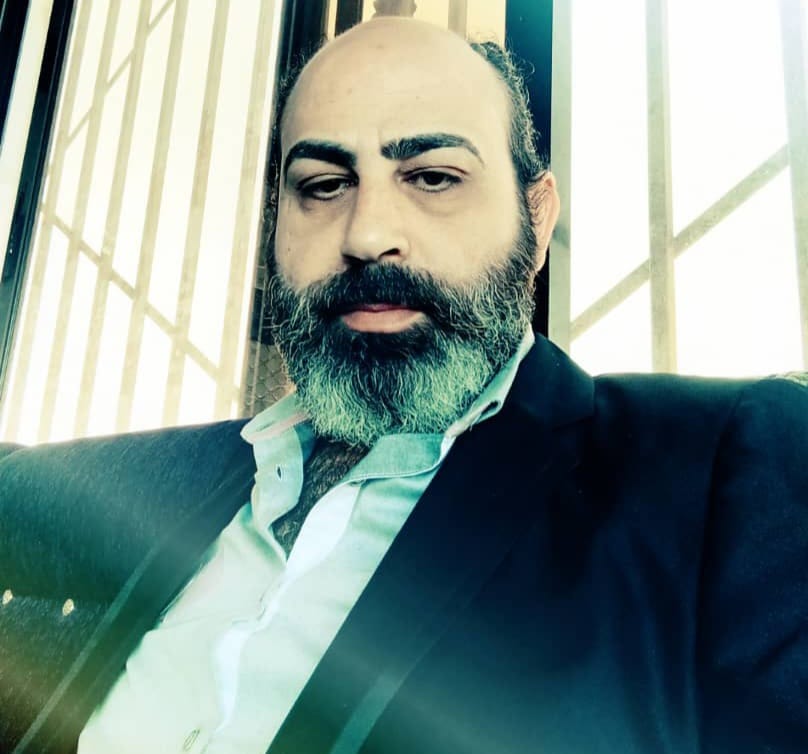
Amjad Ismail Al-Agha, writer and political researcher
In international equations, you are either sitting at the table for political investment in regional and international events to remain within the equation of effectiveness and influence, or you are not. This approach applies to the majority of countries searching for regional influence linked to current developments in the region, specifically with regard to the Palestinian-Israeli conflict, and given that “Hamas” is within the “Iran Resistance” axis, Iran seeks through “Hamas” to reserve an advanced seat at the investment table. Politically, it also reserved a seat through its agents on many occasions that are too numerous to mention now, to strengthen its regional position, but in international equations as well, Iran’s concerns are understood in the context of its regional ambition, as well as in the same context the desire of the United States and Russia to penetrate deeply into what could be called rededication. Rules of political engagement in the region.
What is required by Iran in the context of Operation “Al-Aqsa Flood” and to reserve a seat at the table for political investment in the Palestinian-Israeli conflict, is to activate mechanisms to pressure Israel in order to reach a ceasefire agreement and put an end to the ongoing military operations between “Hamas and Israel.” In Iranian calculations, this goal constitutes half a victory, as by prolonging the military operations, Iran and its axis will be in a state of great embarrassment as a result of its silence and contentment with operations with limited effects that do not exceed the limits agreed upon, and given that such an agreement, if it occurs, will work to keep Iran and its ally, Hamas, in place. “Within the framework of any expected settlement of the Palestinian issue, and therefore the second half of “victory” can be obtained through political settlements, especially since Iran is adept at exploiting critical and fateful regional moments.
Iranian political prowess in exploiting the aftermath of the “Al-Aqsa Flood” operation may make it difficult for Tehran to think about confronting the American and Israeli roles in the region, especially given the security and military roles of both Washington and Tel Aviv, and with the wide network of alliances that were engineered by the Americans and Israel with the countries located in The geopolitical field of Iran, like Azerbaijan, the UAE, and later Saudi Arabia, through its normalization with Israel, Iran’s strategic interests are now threatened, and it needs to rearrange the geopolitical balances, and there is no room for this except by mixing the political cards and moving them with the military stick, while trying to maintain the line of balance between politics and military, including It ensures that developments do not slip away and take directions far from Iranian goals.
The Iranian military establishment does not want to go far with the military escalation, and is working within the framework of keeping the fire within the Palestinian theater. The Iranian perception is fully aware that the fire emerging from Gaza will affect Tehran, and perhaps the equation drawn by Iranian Foreign Minister Hussein Amir Abdollahian is the best expression of the Iranian desire not to Expanding the circle of fire and pushing to stop it at the level it has reached, when I consider that when Gaza falls and Hamas is eliminated, Iran will not be able to protect Tehran from the fall of phosphorus bombs. This equation reminds us, to a large extent, of the equation drawn up by the Iranian leader in 2012 when he paved the way for Iranian military entry on the side of Damascus in the war, when he considered that defending Damascus is defending Tehran, and in the event of the fall of Damascus, we will not be able to defend Tehran.
In the event of an American-Iranian clash on the territory of Gaza, what Iran can gain from forcing Israel to cease fire will have more important political benefits than what Iran might gain in the event of an expansion of the circle of fire, especially since any case of direct Iranian clash with Israel will not be limited to the side. Not only Israel, but Washington will inevitably have its military weight in this clash, and therefore the results are not guaranteed Iranianly, which was translated by the Iranian leader in his speech earlier when he addressed the American administration, warning of the consequences of continued bombing operations against Gaza after Washington’s direct entry into the crisis line. . Through his statements, the guide tried to convey a message that the development of matters in Gaza would not be in the interest of the American efforts to preserve Israel’s survival, and Washington must work to stop military actions in Gaza so that this does not lead to the explosion of peoples who have begun to lose their patience and ability to endure. Then the future of Israel’s existence will be in real danger.
In fact, although the Al-Aqsa Flood operation is directly linked to the context of the Palestinian-Israeli conflict, what is currently taking place is a proxy war between the United States and Iran. The American administration collectively came to Israel based on two considerations. The first is to stand by Israel and support it militarily and politically, and the second is a warning. Its enemies are able to open other fronts and move the war from its current descriptions to a wide regional war, and it will be difficult for Iran to manage the confrontation with Israel and adopt quick and fatal strikes, because that will have an American price that Iran may not be able to pay.
In the depth of the situation of the Iranian-American rams on the land of Gaza, there are two things that are directly related to the American-Iranian conflict. The first is Iran’s determination to achieve the stage after the Al-Aqsa flood. Whether the war remains within its current borders or expands to become a regional war, Iran and its axis have an opportunity to record a “victory.” “On a path that changes the Middle East, which is the opposite path to what Netanyahu envisioned of “changing the Middle East” from Gaza. The second matter is the American rush to support and protect Israel in the post-Al-Aqsa flood stage by forming a government far from Netanyahu and his extremism that restores consideration to negotiating with the Palestinian Authority on the “two-state solution.”
Between this and that, Iran is fighting what it sees as an American project for a new Middle East through which it is besieged, through which its regional project collapses, the concepts of the Palestinian-Israeli conflict are resolved, and a two-state solution is agreed upon according to an American vision far from Iranian solutions. But what is frightening, until the completion of the American projects and the corresponding Iranian projects, is that the Palestinians will remain under the headings of displacement and death.
 English
 Español
 Deutsch
 Français
 العربية