



Exile Between Integration and Assimilation: A Human Journey in Northern Europe

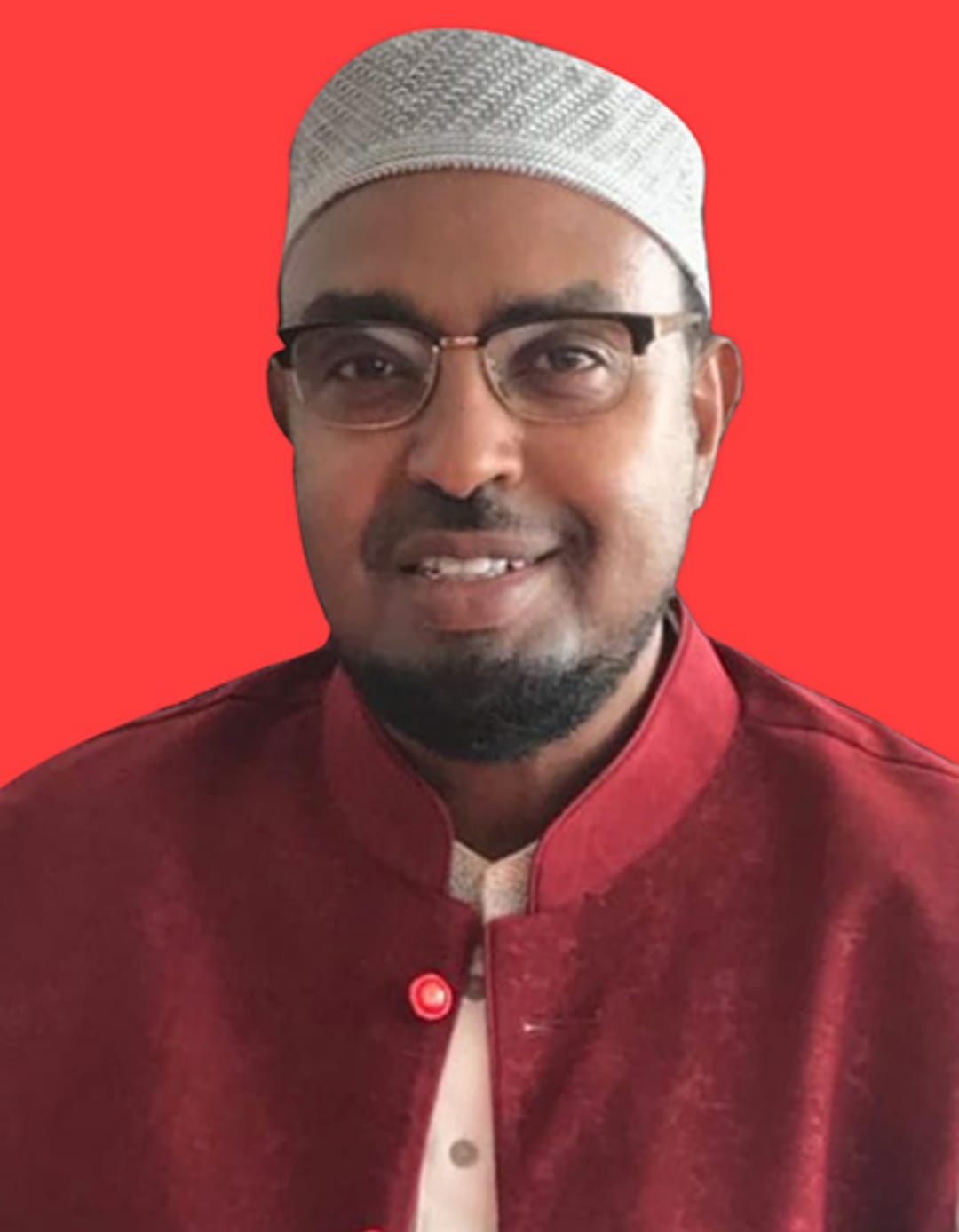
By: Abdulqader Ahmed Jame – Gothenburg, Sweden
Exile is not merely a transition from one geography to another; it is a profound transformation in one’s awareness of the self and the surrounding world. It is an experience that reshapes inner features before outer ones, placing a person before questions they never imagined they would have to answer.
Thirty-two years ago, fate carried me from the city of Isiolo in Kenya to Sweden, driven by a passion for discovery and filled with expansive dreams. At the time, I was a young man who believed that the path to success was straight, and that the world was open to those who dared to knock on its doors. Yet reality soon revealed that exile is not a dream to be lived, but an experience to be endured—with all its psychological, cultural, and human challenges.
Exile as an Existential Test
As time passed, the contours of the experience began to take shape. The road was not easy; it was long and arduous, marked by moments of frustration and continual transformation. Some dreams faded, others evolved, and I learned that success is not a ready-made gift, but the fruit of patience and persistent effort.
Despite this, the journey was not without its bright aspects. It allowed me to achieve a degree of stability on both educational and family levels, and to contribute to community and faith-based work. Yet these gains did not erase a parallel truth: that exile, at its core, is a partial severing from one’s roots and a gradual loosening of one’s original cultural identity.
Migration Between Dream and Reality
Many view migration to Europe as a shortcut to prosperity and stability, unaware that this path carries complex challenges. Migration is not always a complete success story; rather, it is an open-ended journey shaped by intertwined opportunities, psychological pressures, and cultural transformations.
History reinforces this reality. Experiences of migration across centuries show that returning to one’s homeland often becomes a postponed—or even impossible—idea. Arab communities that settled in South America in the nineteenth century, as well as others in Europe, lived with the hope of return, yet in many cases, it remained nothing more than an unfulfilled longing.
The Dilemma of Integration: How Do We Avoid Dissolving?
At the heart of the migration experience lies a delicate question: how can one integrate into a new society without losing their identity?
Community experiences vary in answering this question. Some have succeeded in achieving a balance between openness and preserving cultural specificity, while others have lost this balance, finding themselves in a state of double alienation: disconnected from their roots and never fully belonging to their new society.
In this context, the Prophetic tradition offers an advanced model for dealing with exile. When the Prophet Muhammad (peace be upon him) directed his companions to migrate to Abyssinia, it was a conscious choice of a just environment. The companions succeeded in engaging with the new society without compromising their core values, becoming a model of conscious integration—one based on influence rather than dissolution.
The Second Generation: A Hybrid Identity
This challenge intensifies for subsequent generations. Children grow up in a different cultural and linguistic environment, adopting the values of the society in which they are born, making the idea of “return” to the original homeland less realistic.
A hybrid identity emerges—one that combines inherited heritage with lived reality. This can offer cultural richness, yet it may also place individuals in a gray zone of belonging, where questions of identity, authenticity, and integration intertwine.
Conclusion
Ultimately, exile cannot be reduced to a matter of success or failure. It is a complex human experience that tests one’s ability to adapt without losing oneself, and to contribute meaningfully in whatever context one finds themselves.
Perhaps the most fitting expression is this: a true believer is like the rain—wherever it falls, it brings benefit.
 English
 Español
 Deutsch
 Français
 العربية