




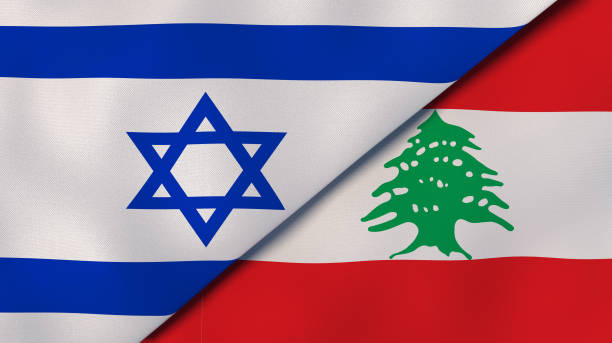
Written by Dr. Hassan Merhej
expert on Syrian and Middle Eastern affairs.
As the war continues in Gaza, and with the nature of regional and international events, the fireball that began in Gaza is feared to expand and spread to other fronts, especially the southern Lebanon front, and despite Resolution 1701, which put an end to a 33-day war between Israel and Hezbollah, which Its effects are still in effect, but this decision has become under actual threat due to the escalation of military operations in southern Lebanon since October 7 and the beginning of Operation Al-Aqsa Flood.
Before diving deep into the military and politically related developments regarding Resolution 1701, the United Nations Security Council Resolution 1701, adopted unanimously on August 11, 2006. Its aim was to resolve the Lebanese-Israeli conflict. At that time, the Lebanese government unanimously approved the resolution in August 12, 2006, on the same day, Hassan Nasrallah stated that his forces would respect the ceasefire. He also stated that as soon as Israel stops its offensive operations, Hezbollah will stop its missile attacks on Israel. On August 13, the Israeli government voted in favor of the resolution with a majority of 24 in favor and 0 against, with one minister abstaining from voting, and accordingly a ceasefire was established on Monday, August 14, 2006.
The essence of UN Resolution 1701 stipulates the cessation of hostilities, the withdrawal of Israeli forces from Lebanon, and the deployment of an additional UN force concerned with monitoring the cessation of hostilities in coordination with the Lebanese army. The resolution also stipulated the creation of an area between the Blue Line and the Litani River, which is known as the South Litani area, provided that it is empty. Of any militants, military equipment and weapons, except those belonging to the Lebanese Armed Forces and UNIFIL forces.
Among the above, the resolution, and as a result of the ongoing state of tension and the nature of the Lebanese-Palestinian border, this resolution witnessed many violations, whether by Israel, which continued its attacks and violations of Lebanese airspace, or by Hezbollah, as a result of Israel’s failure to adhere to the terms of the resolution and its continued attacks on Lebanese territory. Which prompted Hezbollah to keep its fighters in the southern Litani area.
With the military developments, whether in Gaza or southern Lebanon, there are many question marks and questions about the fate of this decision and whether its effects are still in effect, or whether there is a need to issue a new UN resolution to end the state of fighting in southern Lebanon, especially since there is regional and international fear. From the explosive situation throughout the region.
Recently, many international newspapers spoke about efforts led by the United States with Israel and Lebanon in order to control tensions between the Lebanese and Palestinian borders, to maintain a state of calm and prevent being drawn into a wide war. In parallel, Paris, supported by Washington, continues its effort to implement Lebanon’s Resolution 1701, on the basis of Hezbollah’s withdrawal. From the south of the Litani and creating a buffer zone; This prompted caretaker Prime Minister Najib Mikati to say that Lebanon is ready to implement the decision on the condition that Israel withdraws from its occupied territories.
Refuting the above requires studying the escalation scene in its entirety. First of all, Hezbollah, as a result of the continued Israeli attacks on Lebanese territory, is responding to the killing of civilians and expanding operations to an area wider than 5 kilometers. However, on the other hand, Israel realizes that completely breaking the rules of engagement with Hezbollah requires direct American military support, while the behavior of The party does not give it the opportunity to force Washington to intervene, and here it can be said that what is happening is a tactical war between Hezbollah and Israel, and more importantly, each party is trying to engineer new equations that do not violate the rules of engagement and that do not affect the essence and content of UN Resolution 1701.
Within the framework of response and counter-reply, there are two facts that can be pointed out.
The first is that Israel is trying to deliver messages to the Lebanese state, and implicitly Hezbollah, that it still has the upper hand in the field of southern Lebanon.
The second concerns Hezbollah, as the party is also still sending signals to Israel that the party has the ability and willingness to provide many surprises on the field.
Among the givers, no one, specifically Israel, has an interest in escalation in southern Lebanon, and it seeks, under the auspices of Washington, Paris, and Arab capitals, to completely suppress the southern front. However, Hezbollah, through the type of targeting against Israel, maintains the clear deterrence equation, so if Israel wants this to stop, Front, there must be a ceasefire in Gaza, as a primary goal of the battle on the fronts to support Gaza.
In the same context, Israeli Defense Minister Yoav Galant vowed to remove Hezbollah beyond the Litani River in southern Lebanon, whether through an international political arrangement or military action based on UN Resolution 1701, which brought “the international settlement into the current tension equation, next to war.” Overall.
In recent days, there has been increased talk in political circles in Lebanon about the possibility of amending Resolution 1701 to represent a way out of the current tension on the borders. However, those familiar with the course of events in the country indicate that amending the resolution is out of the question, and therefore the issue of amendment is not serious, nor It can be expected that there will be an amendment to Resolution 1701, but the trend is towards its implementation. A French and American delegation recently visited Lebanon and spoke about implementing Resolution 1701, and this may be the way forward.
The reality of the situation confirms that any amendment to the content of Resolution 1701 is out of the question for Hezbollah, especially since the latter set basic determinants related to escalation and linked this to ending the war in Gaza.
Since the start of the war in Gaza and the clashes in southern Lebanon, Najib Mikati has been stressing his country’s commitment to implementing Security Council Resolution “1701,” which emphasizes the importance of extending the Lebanese authorities’ control over all of its territories. Resolution 1701 speaks about removing the offensive presence. South Lebanon, but today, as long as there is a war between two parties, there is necessarily an armed presence. On the other hand, Israel has not adhered to Resolution 1701. For 17 years, it has been violating it amid the silence of the world. Today, Hezbollah is reacting due to Israel’s attacks and violations.
In conclusion, Hezbollah’s withdrawal beyond the Litani River is talk that promotes the achievement of moral matters related to Israel, and the implementation of Resolution 1701 in light of the current state of escalation is unrealistic, and the scene in southern Lebanon and Resolution 1701 will remain as it is, until the end of the Gaza war and the situation calms down in South Lebanon, and then the green light will be given to begin a comprehensive settlement and put points on the provisions of Resolution 1701. Until that time, the scenes in southern Lebanon and northern Palestine will remain as they are, until the political and military vision regarding the upcoming scenes becomes clear.
 English
 Español
 Deutsch
 Français
 العربية