




Soukaina Sghir
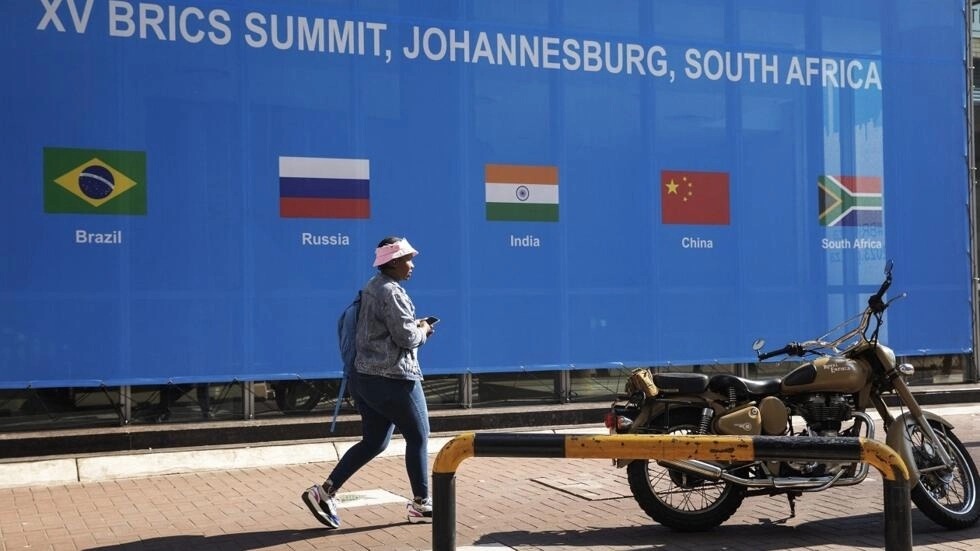
Johannesburg is currently abuzz with anticipation as the 15th BRICS summit convenes, marking a significant milestone for Brazil, Russia, India, China, and South Africa after a hiatus necessitated by the COVID-19 pandemic. The gathering of these prominent nations serves as a unified call for political and economic recalibration within a global order that the BRICS nations perceive as excessively dominated by Western influence. Against the backdrop of this overarching theme, leaders converge in South Africa from August 22nd to deliberate upon objectives that bear the potential to reshape the global landscape.
The symbolism of this momentous occasion reverberates not only within the confines of the summit but also resonates through Johannesburg’s airport and streets, adorned with a resonant slogan encompassing both the spirit of the BRICS nations and the aspirations of Africa. The tagline, advocating accelerated growth, sustainable development, and inclusive multilateralism, encapsulates the essence of the summit.
Beneath these rhetorical expressions lies a collective assertion by Brazil, Russia, India, China, and South Africa—a synergy encapsulated by the acronym BRICS. United by a shared sentiment, these nations challenge a prevailing political and economic order that they perceive as disproportionately tilted toward the West. It’s noteworthy that this shared outlook doesn’t imply unanimity on every front, including contentious topics such as the possible enlargement of the BRICS bloc, which is expected to be a focal point of discussions during the summit.
Emphasizing the momentum of this diplomatic convergence, President Cyril Ramaphosa of South Africa is set to host his Chinese counterpart, President Xi Jinping, further underscoring the significance of the occasion. The historical rapport between the two leaders, along with China’s instrumental role in facilitating South Africa’s entry into the BRICS consortium, sets the stage for dynamic bilateral discussions.
President Xi Jinping’s presence also looms over the dialogue between China and Africa, held in tandem with the summit. This confluence is both a testament to China’s enduring influence and a platform for asserting its commitment to fostering substantial progress in the African Union’s integration into global affairs. President Xi’s expressed aspirations for African countries to wield a more substantial role on international and regional stages resonate as China seeks to expand its role in Africa.
Central to China’s narrative is its endeavor to promote the use of local currencies and the substitution of the yuan for the dollar—a process that will undoubtedly be gradual. The New Development Bank (NDB), while not yet a contender against established international financial institutions, might unveil plans for increased lending in local currencies during the summit, showcasing a bid for financial independence and fostering diversified exchanges.
In the face of ongoing tensions with the United States, President Xi Jinping seizes the BRICS platform to amplify his ties with fellow member nations and countries aspiring to join the fold. The BRICS stage becomes a testament to China’s commitment to collaborative engagement amidst a shifting geopolitical landscape.
Simultaneously, India’s participation in this summit encapsulates its foreign policy of “multi-alignment.” Prime Minister Narendra Modi’s recent overtures to strengthen ties with the United States and France converge as he spearheads representation for the “Global South” in Johannesburg, a region of shared aspirations. Modi’s forthcoming meeting with President Xi Jinping symbolizes the complex dynamics of India-China relations, punctuated by cooperation, competition, and diplomatic tact.
Amidst the flurry of discussions, areas of dialogue and divergence stand prominent. These include the delicate matter of enlarging the BRICS fold with a multitude of candidate countries, crafting a response to the dollar’s unwavering dominance, and addressing the intricate relations between India and China. While prospects for significant breakthroughs remain guarded, experts like Kanti Bajpai underline the importance of the summit as a platform for showcasing solidarity and joint statements between these prominent leaders.
Notably, the absence of Russian President Vladimir Putin, who engages via virtual means due to legal constraints, casts a unique shadow on the proceedings. His absence underscores Russia’s desire to illustrate its global relevance and underscore that it isn’t isolated in the international arena, especially concerning its actions in Ukraine—an issue that hasn’t garnered condemnation from any of the BRICS member states.
Lastly, the host nation, South Africa, extends its influence by hosting the summit, transforming the event into a rendezvous that resonates across the African continent. President Cyril Ramaphosa’s vision for inclusivity is evident in his invitations extended to dozens of African nations, further amplifying the significance of this summit beyond the BRICS bloc.
As the curtains rise on this 15th BRICS summit, the world watches in anticipation, cognizant of the potential for transformative discussions, diplomatic breakthroughs, and renewed collaborations that stand to shape the trajectory of these prominent nations and the global stage at large.
 English
 Español
 Deutsch
 Français
 العربية