




Soukaina Sghir
India’s space agency has unveiled images taken by its spacecraft of the far side of the moon as it embarks on a mission to attempt a landing on the lunar south pole. This comes just days after Russia’s failed lunar lander attempt.
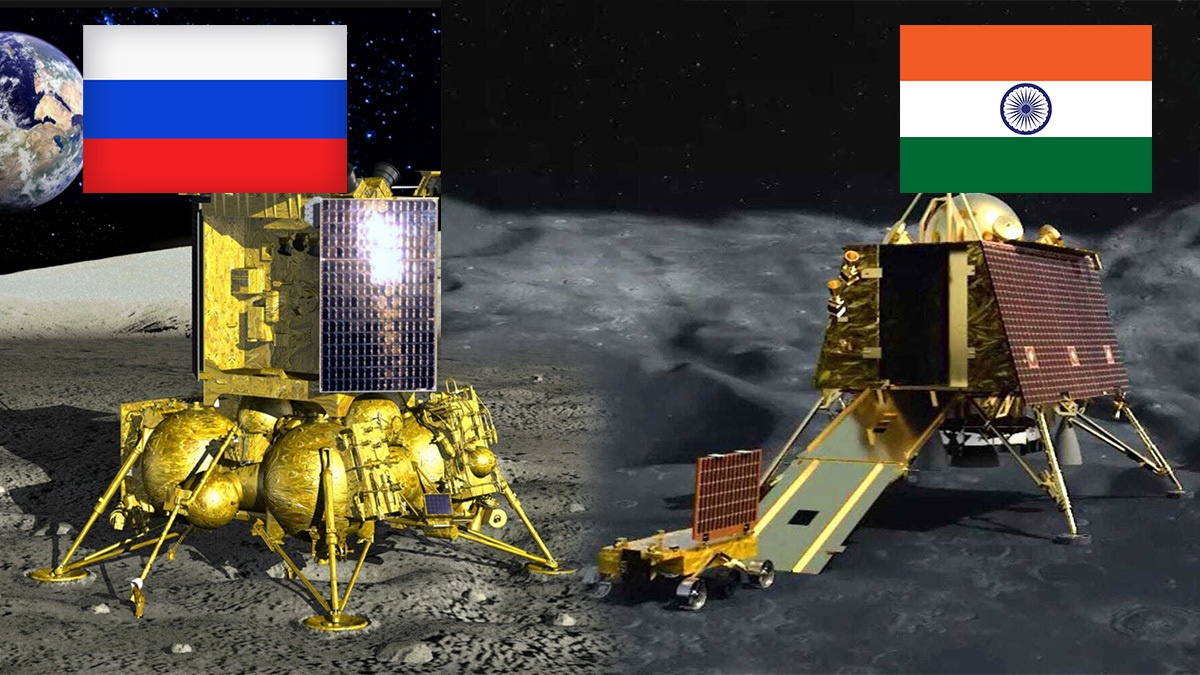
The Indian Space Research Organisation (ISRO) had been racing against Russia to be the first to successfully land on the lunar south pole, a region believed to contain water ice in its shadowed craters, which could prove crucial for sustaining future moon missions.
Amidst the news of Russia’s Luna-25 mission failure, ISRO confirmed that its Chandrayaan-3 spacecraft remains on track for a landing on August 23rd.
The space agency emphasized that all systems on the spacecraft are functioning flawlessly, and no issues are anticipated on the landing day.
Chandrayaan-3 is India’s second attempt to land on the moon’s south pole. In 2019, ISRO’s Chandrayaan-2 mission managed to deploy an orbiter, but the lander crashed during its landing attempt. The challenging terrain of the lunar south pole makes landing difficult, but achieving this feat would be historic, with the region’s water ice potentially providing essential resources for future missions.
Images released on Monday showcased moon craters captured by the Lander Hazard Detection and Avoidance Camera aboard the ISRO craft. This camera’s purpose is to identify safe landing locations for the spacecraft.
Having taken off on July 14th, India’s moon mission is a significant step toward establishing the country as a space power. Prime Minister Narendra Modi’s government aims to boost investment in private space launches and satellite-based industries.
“If Chandrayaan-3 succeeds, it will elevate India’s space agency’s global reputation. It will demonstrate India’s growing role in space exploration,” remarked Manish Purohit, a former ISRO scientist.
A successful moon landing would also reinforce India’s reputation for cost-effective space engineering. Chandrayaan-3’s budget was approximately 6.15 billion rupees ($74 million), less than the production cost of the 2013 Hollywood space film “Gravity.”
This achievement would make India the fourth country to achieve a successful moon landing, following the former USSR, the United States, and China.
“India will acquire a new technology with a successful landing, which is a significant achievement,” stated K. Sivan, former head of the country’s space agency, following Chandrayaan-3’s launch.
ISRO scientists noted that lessons from the previous mission’s failure led to modifications in Chandrayaan-3, increasing the likelihood of a successful landing. These changes include allowing for a safe landing within an expanded zone and equipping the spacecraft with more fuel, solar panels, and robust landing gear.
Executives in India’s budding space industry also anticipate a boost. The number of space startups in India has doubled since 2020 when private launches were permitted.
“The next three days will be nothing short of ‘terrific’! Eagerly looking forward to the landing!” exclaimed Pawan Chandana, co-founder of Skyroot, which launched India’s first privately constructed rocket last year, on the platform formerly known as Twitter.
 English
 Español
 Deutsch
 Français
 العربية