




Altaf Moti
Pakistan
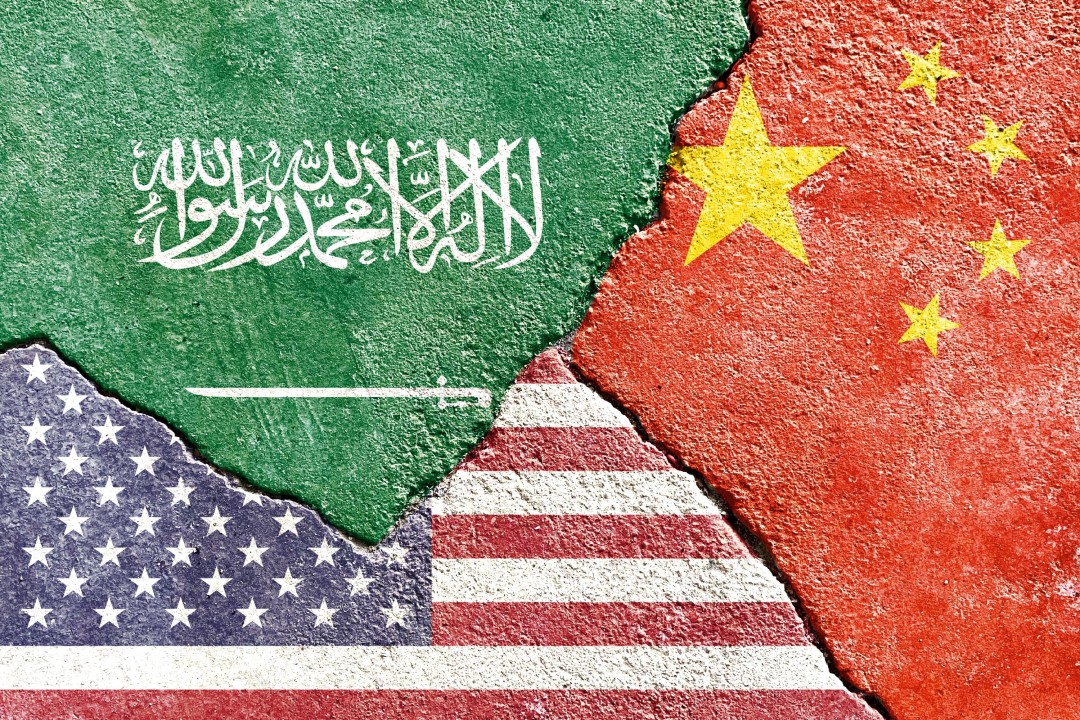
The geopolitical landscape of the Middle East has undergone a significant shift in late 2025. Following the recent high-profile meetings between Saudi Crown Prince Mohammed bin Salman and U.S. leadership in Washington, the United States has reaffirmed its security commitments to the Kingdom. While Western analysts often frame this renewed alliance as a move to contain Beijing, a deeper analysis reveals a different reality. The evolving U.S.-Saudi relationship does not signal an exit for China. Instead, it highlights a complex multipolar environment where China’s influence remains structural, economic, and deeply entrenched.
The Myth of Zero-Sum Geopolitics
The prevailing narrative suggests that for Washington to win, Beijing must lose. However, the current dynamics in Riyadh contradict this zero-sum perspective. Saudi Arabia has effectively adopted a “Saudi First” policy. This strategy relies on diversifying partners rather than choosing sides.
For China, this holds a distinct advantage. Saudi Arabia is no longer a client state solely dependent on Western directives. Instead, it is an autonomous middle power. Riyadh’s decision to upgrade defense ties with the U.S. is a pragmatic move to secure its borders. Paradoxically, this improved security stability benefits China. As the largest purchaser of Saudi oil, China requires a stable Persian Gulf to ensure the free flow of energy. If the U.S. military provides the security umbrella that protects these shipping lanes, Beijing secures its energy interests without bearing the heavy financial and military burden of policing the region.
The Irreplaceable Economic Engine
While Washington offers security guarantees and high-end military hardware like the F-35, it cannot easily replicate China’s role in Saudi Arabia’s economic transformation. The Saudi “Vision 2030” plan requires massive infrastructure development, industrial manufacturing, and construction capacity. This is where China remains the indispensable partner.
As of November 2025, Chinese state-owned enterprises continue to dominate the construction sectors of Saudi “giga-projects” such as NEOM. Recent data indicates that over 750 Chinese companies are currently operating within the Kingdom. While the U.S. focuses on defense and specific high-tech sectors like AI chips, Chinese firms are building the physical backbone of the new Saudi economy—from high-speed railways to solar power farms.
Furthermore, trade volumes tell a clear story. China remains Saudi Arabia’s largest trading partner. The economic synergy is complementary: Saudi Arabia exports energy to fuel Chinese industry, and China exports the machinery and consumer goods that the Kingdom consumes. This systemic integration creates a resilience that diplomatic agreements with third parties cannot easily dismantle.
Technology and Sovereignty
A key area of focus in the recent U.S.-Saudi talks has been technology, specifically Artificial Intelligence and rare earth minerals. The U.S. has sought to limit the deployment of Chinese digital infrastructure in favor of American alternatives. While this presents a challenge, it also spurs China to adapt.
China has pivoted toward sectors where U.S. restrictions are less rigid. This includes renewable energy technology, electric vehicles (EVs), and civil infrastructure. For instance, recent agreements in 2025 have seen Chinese EV manufacturers expanding local production facilities within Saudi Arabia.
Additionally, Saudi Arabia’s insistence on “technological sovereignty” means it is wary of being fully dependent on any single supplier. Riyadh has explicitly communicated to Beijing that its security deals with Washington do not preclude commercial cooperation with China. This was evident when Saudi officials reassured Chinese counterparts ahead of the Washington summit that commercial ties would remain robust.
The Energy Market Reality
The discussion regarding the “Petroyuan”—pricing oil in Chinese currency—remains a long-term strategic lever for Beijing. While the U.S. security pact reinforces the status of the dollar in the short term, the structural shift in global oil demand favors China.
The United States is a net energy exporter and a competitor to Saudi Arabia in global oil markets. In contrast, China is a guaranteed long-term customer. This fundamental market reality ensures that Riyadh must prioritize its relationship with Beijing to secure its future revenue. The two nations continue to explore currency swap agreements and cross-border financial settlements that reduce friction in trade, ensuring that financial connectivity continues to deepen regardless of defense treaties.
The recalibration of U.S.-Saudi relations in 2025 is not a defeat for Chinese diplomacy. It is a validation of the multipolar world order China has advocated. The fact that Washington must now offer binding security guarantees and advanced technology transfers to retain influence is a testament to the competitive pressure Beijing applies simply by rising.
For China, the situation represents a stable equilibrium. The U.S. bears the cost of regional security, while China reaps the benefits of economic integration and energy access. Far from being pushed out, China remains a central pillar of the Middle East’s future, operating in a parallel lane of influence that American military power cannot displace.
 English
 Español
 Deutsch
 Français
 العربية